
Stop Loss Calculator
Turn account risk into a stop-loss price.
Set the boundary before the trade.
- 100% Free
- No Signup
- Works Everywhere
How it works
1. Define account risk
Set balance and the percentage you are prepared to lose.
2. Enter position details
Add entry, size and the value of a one-point move.
3. Calculate the stop
The allowed price distance is applied below or above entry.
Take your trade review further
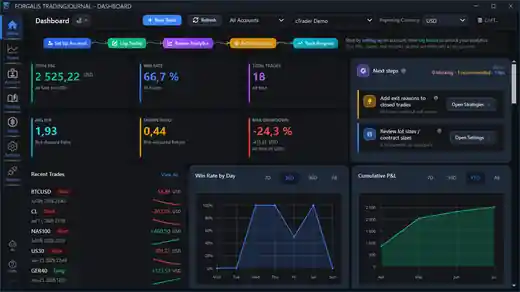
This calculator helps you define the planned stop.
Forgalis TradingJournal is a separate Windows app for reviewing whether you respected, moved or ignored that stop across real trades.
Related Tools
See it in your website
Embed this calculator with a simple iframe. No signup required.
View embed codeCommon Questions
What does value per 1.00 price move mean?
It is the money gained or lost by one position unit when price moves by 1.00. For a simple share this is normally 1, but contracts and leveraged instruments can differ.
Should the stop come from risk or the chart?
Both matter. The chart defines where the trade idea is invalidated. Account risk determines whether your chosen position size can support that stop distance.
How does direction affect the result?
A long stop is placed below entry. A short stop is placed above entry. The allowed loss and distance calculation are otherwise the same.
Does this include spread and slippage?
No. Spread, commission, slippage, gaps and execution quality can make the actual loss larger than the planned amount.
Transparent calculation
How the stop-loss price is calculated
The calculator converts account risk into the maximum price distance your current position size can absorb.
Risk amount
Account balance × Risk %$10,000.00 × 1% = $100.00
Loss per 1.00 move
Position size × Point value50 × $1.00 = $50.00
Stop distance
Risk amount ÷ Loss per 1.00 move$100.00 ÷ $50.00 = 2 points
Stop-loss price
Entry price − Stop distance100 − 2 points = 98
Important: This is a general point-value calculation. Confirm contract size, tick value, pip value and currency conversion with your broker or platform before placing a trade.